Novels

The Island of Doctor Moreau

By H. G. Wells

(Due to unfortunate circumstances, this forum post was not completed until well after our discussion of the novel.)

Parody of Christianity in The Island of Doctor Moreau

            In The Island of Doctor Moreau, H. G. Wells creates a parody of Christianity, with the Beast Folk as the worshippers and Doctor Moreau as their God. In order to maintain order on the island, Doctor Moreau has ordered the Beast Folk to follow a list of five commandments:

‘Not to go on all-Fours; that is the Law. Are we not men?

‘Not to suck up Drink; that is the Law. Are we not men?

‘Not to eat Flesh or Fish; that is the Law. Are we not men?

‘Not to claw Bark of Trees; that is the Law. Are we not men?

‘Not to chase other Men; that is the Law. Are we not men?’ (59)

This list mimics the Ten Commandments, and the Beast Folk took it as gospel. Chanting these commandments and praises of Moreau, the Beast Folk hold a sort of religious service, like a funhouse mirror reflection of Sunday morning church (59). They are devoted to mankind, and the deterioration of this devotion as “day by day, the human semblance left them,” functions as a commentary on man’s attempts to become gods (123).

Doctor Moreau is the clear mad scientist of the novel. He strives to be a Creator, and in that sense, to become a God. Moreau has used his secluded island to set up his own experiment of divinity, testing whether or not he can successfully create his own mankind. Ironically, his folly was his antihumanist approach that dismissed the divine mysteries of humanity; he could not create men and become godly because he did not value man’s divinity. Moreau’s failure highlights how science cannot replace religion, since even the most dedicated scientist failed to become a God. The Beast Folk’s struggle to deny their animal instincts and become men reflects man’s struggle to deny our humanist qualities and achieve a transhumanist divinity. The Beast Folk inevitably turn back into beasts, and Doctor Moreau, their Creator, must face his mortality



Heart of a Dog

By Mikhail Bulgakov

Thematic Repetition in Heart of a Dog

          In Heart of a Dog, I loved how Bulgakov’s repetition of certain words or phrases hammered a certain image or meaning into my brain almost without me realizing it. Some of these phrases are more obvious, like the songs the Philip Philippovich frequently sings to himself “Toward the sacred banks of the Nile…” and “From Seville and to Grenada…”(Bulgakov 123 and 15). This adds to the relatability and likability of his character, illustrating him as someone who is somewhat carefree and appreciative of music. It also helps contrast his usual witty, light-hearted demeanor with the troubled, temperamental outlook he takes on while Sharik is not entirely a dog. Philippovvich’s singing at the end of the novel also highlighted his return to his original behavior after the last operation, symbolizing the return to normalcy. After such a fantastic discovery, having everything simply revert back to the way it was makes a very powerful comment about nature. By attempting to control nature, Philippovich brought on unforeseen and almost catastrophic consequences. The chaos caused by Sharikov and the crime Sharikov very nearly committed, not the least of which being his potential crimes against women, only came to a resolved conclusion once all of the dead man died and the dog was once again a dog. Once Philippovich opened nature’s Pandora’s Box, he had a reaction reminiscent of a shopper who, when picking out a birthday card, unexpectedly opens one that blares music.

Another repeated theme that occurred only in a small section of the book was the color green. The word “green” is used five times over the span of four pages (Bulgakov 91-94). It describes the political book that is burned, the fire on the tip of Philippovich’s cigar, the shade of the lamp Phillipovich turns on, and finally, Phillipovich himself. This is at a moment of ambiguity. Philippovich takes this time to come to a decision that the reader is never brought in on after exclaiming “By God, I think I will,” without any explanation of his intent (Bulgakov 94). Green represents this ambiguity to me, repeatedly resurfacing as a distortion of well-accepted forms of enlightenment. It literally distorts enlightenment in the case of the lampshade by shrouding the lightbulb, one of man’s greatest scientific inventions. This suggests that the value of science and the truth science provides is not as clear cut as it is assumed to be. Fire, one of the key elements that first separated man from beast is also described as being green, illustrating that the differences between man and beast aren’t defined as previously thought. The political book is green as well, showing how the political line has been blurred as well. This green theme was introduced well before this section, though, by the man with green hair. He had bought hair dye and expected it to be one color but it turned out to be another: green. This foreshadowed Philippovich’s later reexamination of the situation, establishing that things aren’t always as they seem.

We

By Yevgeny Zamyatin

Symbolic Skies in We

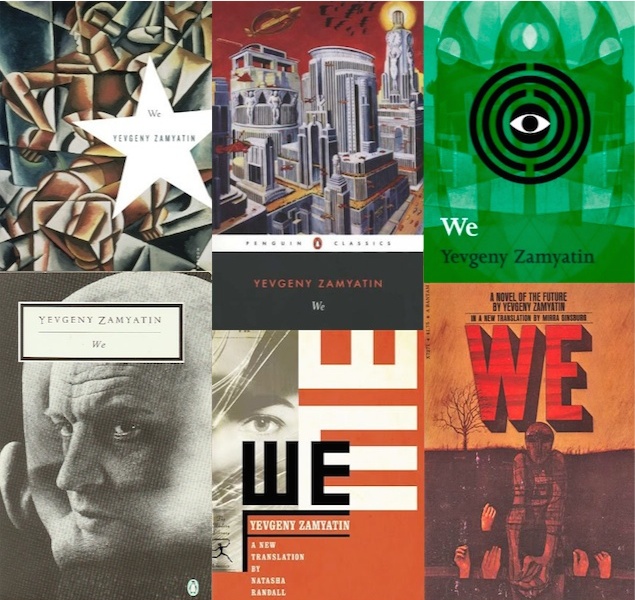
          I love Zamyatin’s use of the sky to portray which factors are in control of D-503’s life. At the start of the novel, D-503 makes a point to admire the clarity of the sky, calling it “sterile and immaculate” (Zamyatin, 5). He likens this sky to the conformity of his fellow Numbers, describing their appearance as “[uniforms the color of the] blessed blue sky, little baby suns on each badge, faces undimmed by anything so crazy as thought” (7). The clarity of the sky echoes D-503’s clarity of thought. He is positive that the OneState is right in all matters, especially in that reason, logic, and mathematics are the only truth. The sky directly after he makes the choice to go along with I-330, though, is flawed by a single cloud, representing the complication of his decision. He is no longer controlled completely by his faith in the system and sense of duty, this woman has complicated his reasoning and has a hold on him. The pattern holds that whenever D-503’s faith and blind compliance with the ideals and policy of the OneState is questioned or ignored, there’s mist or fog present. Whenever D-503 falls under the spell of I-330, whether by idea or by action, the sky gains color. At the end of the book, though, when the OneState restores D-503 to his “factory settings”, the atmosphere is described as: “It is day. Clear.” (224). How D-503 is passed from one controller to another, as illustrated by this recurring symbol, very much reminds me of C.S. Lewis’s “conditioners” (Lewis, 71). The leaders of the OneState and I-330 both act as conditioners since they have determined the role people should play in their society and what they should value. The leaders of the OneState are a clear example of this, considering they have conditioned people to value the logical processes and efficient work of machines over previous humanist values, such as creativity and religion. I-330 also acts as a conditioner, though, to a certain extent. She has pulled the strings all along, getting D-503 involved for the sake of his position as builder of the INTEGRAL and re-shaping his values so that his devotion to her and the beliefs that she ingrained in him led him to play the role she had designed for him.

Brave New World

By Aldous Huxley

Rooting for the Wrong Team

           Out of all of the characters in Brave New World, the only one I immediately gravitated towards was John. This was because, despite his odd upbringing, he was the most relatable. He, like the reader, toed the line between the ancient ways of Native American culture and the cold-hearted efficiency of World Control. He expresses his qualms with the new world, declaring: “I want God, I want poetry, I want real danger, I want freedom, I want goodness. I want sin,” (Huxley 215). This outrage mirrors many of the emphasized values in today’s society, or more accurately, society in the days of Aldous Huxley. The importance of Christianity, art, risk, liberty, and morality are all being defended solely by this one character. John’s Shakespearean references also make him the champion for the general belief structure of society as we know it. Shakespeare is known as possibly the greatest literary mind of all time, in part because his works are relatable, capturing what is considered to be ‘timeless’ human emotion. The World State culture, though, has no experience with these emotions. They don’t value the character-building qualities of hard work, nor do they have any experience with love and its many pains. They have no use for nobility, or religious morality Stuck between the two worlds, John’s story soon resembles a Shakespearean tragedy; his many references became prophesy. His demise is illustrated through his repeated quote, “O brave new world” (130). John first believes the Other World to be beautiful and perfect, the way his mother described it. The more he’s exposed to it, though, the more he detests the new world. The society of the World State discredits everything he believes in, belittling the noble ideals he holds most dear. After his conversation with Mustapha Mond, John is left in a crisis of faith. He tries to be as self-sacrificing as possible to repay for his sins and to prove to himself that there is value in his system of beliefs, but he can’t escape the temptations of progress, and participates in a spontaneous Solidarity Service. All the while, John is no longer being described as such. Instead, he is described as “Mr. Savage” (230). With his system of values undermined, his family taken away from him disgracefully, and even his civilized name stripped from him, John is left without meaning and instigates his tragic end. Since John represented and defended everything today’s society stood for, this is Huxley’s argument for this Brave New World. Huxley allowed us time for our horror, gave us a caricature of ourselves, and illustrated what may lie ahead for those resisting progress.

That Hideous Strength

By C.S. Lewis


A Modern Fairy-Tale for Grown-Ups

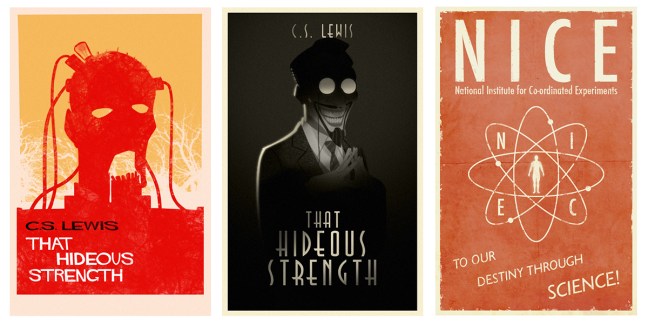
            Though George Orwell may not agree, fairy-tales and fantasies can be just as relatable and truthful as any other genre. In the preface of That Hideous Strength, C.S. Lewis remarks that fairy-tales usually have very “commonplace” beginnings, and “ha[ve] behind [them] a serious ‘point’,” (Lewis 7). The humble beginnings of a fairy-tale, though often overlooked, are necessary to prove such a point. They introduce the realism of the story, what often ends up being at the heart of the story. That Hideous Strength is no exception. The novel begins with Jane, (a plain name), “wast[ing] another morning” thinking about how lonely and aimless her life has become since her marriage (12). It is a seemingly mundane setup, for although it is outlining a quiet tragedy of a neglected wife, nothing particularly extraordinary has occurred. This introduction of an ordinary day is crucial because it introduces the relationship of Jane and Mark, and sets up how Mark is losing sight of what is important in his ambitious haste. Mark’s blinding ambition leads him to hit rock bottom, almost convinced that he is just a pawn in some unstoppable cosmic plan, fighting what seems to be a losing fight. It is at this pivotal moment that Mark finds his strength in “something he vaguely called the “Normal”,” which he associates with “fried eggs and soap and sunlight…” and, most importantly, Jane (296, 297). He chose the side of the Normal, opting to fight for some of the most basic aspects of humanity; most importantly, he chose to fight for love. The contrast of the enormous cosmic battleground filled with fantastic players against the extraordinarily ordinary humanity of Mark’s decision emphasizes the importance and beauty of humanity. This is the point C.S. Lewis wanted to make: that humanity is something too important and too beautiful to let “scientific progress” destroy. Although other genres may be capable of effectively making this point as well, fairy-tales are especially effective because they assign one party to be the “good guys” and the oppositional party to be the “bad guys”. This clearly establishes that the moral ideology of the good guys is inherently good and that the moral ideology of the bad guys is either evil or misguided. Since Mark and Jane come to serve as representatives for humanity, the preservation of humanity is structured to be the good idea, and the destruction of humanity is built in as the evil plan the heroes must stop. The simplicity of the good-versus-evil structure of this modern fairy-tale introduces and reinforces the moral of the story: that humanity should fight the abolition of man.

1984

By George Orwell


Restriction of Belief in 1984

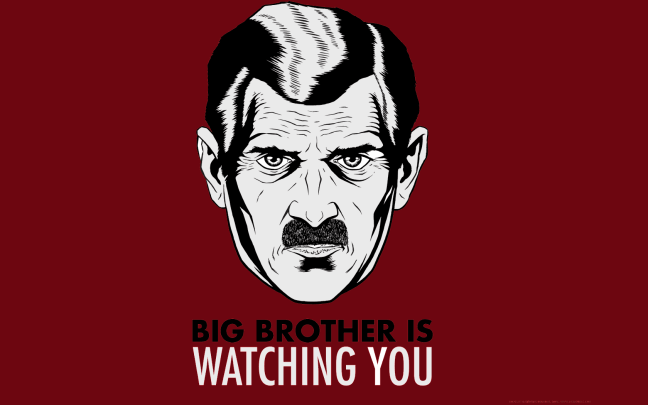
            The dystopia of 1984 is disturbing because it has restricted the freedom of belief. Throughout history, every freedom has been taken away at one point or another, except for belief. An oppressor can silence speech, persecute religion, and imprison free-thinkers, but no one could ever actually force a belief on someone without consent. However, even though the final step towards true belief “can be taken only in complete freedom,” the freedom of belief can be restricted if the very foundations of belief have been eroded (Pieper 35). Julia says that the party “can make you say anything…but they can’t make you believe it,” but without truth and trust, how do you know what you believe (Orwell 137)? This is why the tyranny in 1984 is so dangerous.

Using the definition of belief spelled out in Josef Pieper’s On Faith, “to believe always means: to believe someone and to believe something” (Pieper 35). To believe someone requires trust, and there can be no trust between Party members. Anyone could be the Thought Police, or report to the Thought Police, when they see even one snippet of nonconformity. Even families cannot trust each other. After seeing Mrs. Parsons and her children, Winston remarks:

“With those children…that wretched woman must lead a life of terror. Another year, two years, and they would be watching her night and day for symptoms of unorthodoxy…hardly a week passed in which the Times did not carry a paragraph describing how some eavesdropping little sneak—“child hero” was the phrase generally used—had overheard some compromising remark and denounced his parents to the Thought Police (Orwell 24).”

If a person can’t be trusted, than there is little chance that they can be believed. While the Party can’t completely eliminate the ability to believe someone, they can restrict it so that believing someone who does not conform to the Party’s standards is very difficult. It would be hard to find one such rebel, and incredibly dangerous to believe or believe in them.

In terms of believing in something, the Party has gone to extraordinary lengths to ensure that the only information available to believe in is the information they control. They literally re-write the past, changing it as needed through a process in which “[t]he past was erased, the erasure was forgotten, the lie became truth” (Orwell 64). For those who don’t believe in the Party values, any other values they might believe in have been, or are in the process of being, erased. The only ideas available that are contrary to the Party are those associated with Goldstein and the Brotherhood, but even those are creations of the Party. Although the Inner Party cannot force a person to believe in the values of Big Brother, they leave no other values to believe. Without people to believe and ideal to believe in, who’s to say two plus two does not equal five?

The Manchurian Candidate

By Richard Condon


Mind Control in The Manchurian Candidate

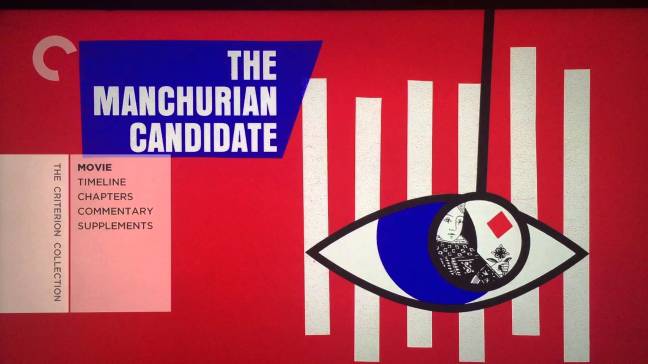
            Mind control plays a large role in The Manchurian Candidate, beyond the explicit hypnosis of Robert Shaw. The relationships revolving around Robert’s mother are particularly controlled. Her relationship with her father definitely was formed from his control over her, especially since she learned to enjoy her abuse. Eleanor seems to be suffering from Stockholm syndrome, having suffered an especially twisted sort of abuse that twisted her perception of reality until she looked at her father as the pinnacle of man, a “shining and thrilling and valiant knight” so wonderful that she needs to dedicate her life claiming his legacy (Condon 83). In turn, she manipulates those in her life to aid her ambition. Every move she makes is carefully calculated, every action she takes is one step closer to her goal of power. Eleanor controlled her first husband, Robert’s father, in every step of their relationship up until he took a moral stand. She picked him out of four candidates to pursue, then made sure she was impregnated, then molded his career to coincide with her aging. This calculated construction of his life gave her control over not only his personal life, but also how he spent the majority of his time and where he would see himself in the future. However, when Robert’s father deviated from the plan “she had at last needed to cuckold him to be rid of him,” (75). Eleanor then took John Iselin under control. She offered him power and prestige as long as he followed her instructions exactly, and he did so with such eagerness that his response to her was often: “Just tell me what to do, hon, and I’ll get it done” (76). She also used his impotence to manipulate him in a variety of ways. If John ever questioned his devotion to her, she would say that he tricked her to guilt him into feeling indebted to her. To ensure that John remained sexually reliant on her, she provided women for him to use. Lastly, she could always go to, or threaten to go to, the press with the news of his impotence in case of emergency.


The Children of Men

By P.D. James


Redemption in The Children of Men

Redemption is at the heart of The Children of Men. Theo, representing humanity as a whole, is searching for some form of redemption. Theo wants to be redeemed for several failures, his gravest sin being his daughter’s death. He does this by helping bring a child into the world, and protecting that child with everything he has. Determined, he decided he had “been responsible for the death of one child…That was enough.” (James 158). By helping the child survive, he had made amends for taking his child out of this world, but that did not redeem him for his lack of feeling toward his wife and child. His lack of love for his family was only redeemed by his love for both Julian and her child. Through his love and selflessness, Theo had made up for his failed marriage where he “cared less because [he] loved less,” and for thinking of his dead daughter predominately “with complaint” (28). Earlier in the story, Theo also gave up the opportunity to influence the Warden to make significant positive changes by stepping down from his role as advisor. When he stands in front of the committee to plead for the Five Fishes, he is reminded that he had the chance to improve the way the Council runs and that he threw it away. Theo finds redemption for this missed opportunity by killing Xan and taking his place. This redemption is more ambiguous, though, because Theo, like Rolf and Xan, justifies his ascent to power by telling himself that he needed to do what had to be done and that “[t]here would be time later to decide whether, and for how long, he needed [power],” (241). The steps he takes as he ascends to power, though, highlight how his emotional investment in the plight of humanity increases as he becomes more involved with the Five Fishes. This is another example of his path to redemption, since at the start of the novel Theo was reluctant to let an old friend live with him and even to help a hysterical woman piece together her broken child-substitute. Theo’s intervention in the Quietus and his subsequent increased compassion and sensitivity prompt him to step into leadership roles, such as in his mission to steal a car, and these leadership roles teach him that he can make a difference in the lives of people he is beginning to care about. In that sense, Theo’s rise to power, while worrying, is the culmination of his redemption from being initially an uncompassionate, unmotivated bystander to being a loving, self-sacrificing leader.