By George Orwell
Restriction of Belief in 1984
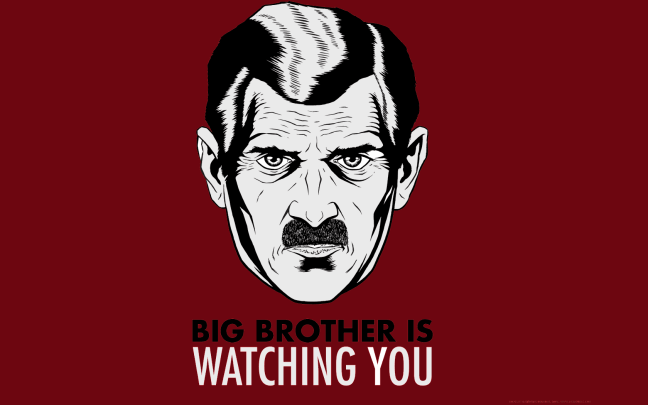
The dystopia of 1984 is disturbing because it has restricted the freedom of belief. Throughout history, every freedom has been taken away at one point or another, except for belief. An oppressor can silence speech, persecute religion, and imprison free-thinkers, but no one could ever actually force a belief on someone without consent. However, even though the final step towards true belief “can be taken only in complete freedom,” the freedom of belief can be restricted if the very foundations of belief have been eroded (Pieper 35). Julia says that the party “can make you say anything…but they can’t make you believe it,” but without truth and trust, how do you know what you believe (Orwell 137)? This is why the tyranny in 1984 is so dangerous.
Using the definition of belief spelled out in Josef Pieper’s On Faith, “to believe always means: to believe someone and to believe something” (Pieper 35). To believe someone requires trust, and there can be no trust between Party members. Anyone could be the Thought Police, or report to the Thought Police, when they see even one snippet of nonconformity. Even families cannot trust each other. After seeing Mrs. Parsons and her children, Winston remarks:
“With those children…that wretched woman must lead a life of terror. Another year, two years, and they would be watching her night and day for symptoms of unorthodoxy…hardly a week passed in which the Times did not carry a paragraph describing how some eavesdropping little sneak—“child hero” was the phrase generally used—had overheard some compromising remark and denounced his parents to the Thought Police (Orwell 24).”
If a person can’t be trusted, than there is little chance that they can be believed. While the Party can’t completely eliminate the ability to believe someone, they can restrict it so that believing someone who does not conform to the Party’s standards is very difficult. It would be hard to find one such rebel, and incredibly dangerous to believe or believe in them.
In terms of believing in something, the Party has gone to extraordinary lengths to ensure that the only information available to believe in is the information they control. They literally re-write the past, changing it as needed through a process in which “[t]he past was erased, the erasure was forgotten, the lie became truth” (Orwell 64). For those who don’t believe in the Party values, any other values they might believe in have been, or are in the process of being, erased. The only ideas available that are contrary to the Party are those associated with Goldstein and the Brotherhood, but even those are creations of the Party. Although the Inner Party cannot force a person to believe in the values of Big Brother, they leave no other values to believe. Without people to believe and ideal to believe in, who’s to say two plus two does not equal five?
 Mad Science In The Mirror of Art